



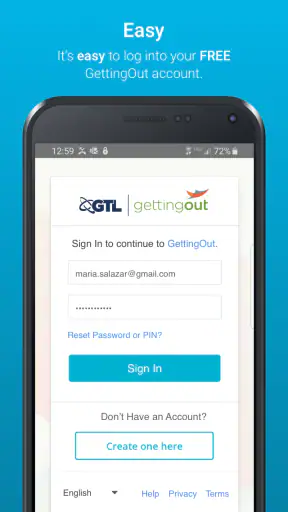
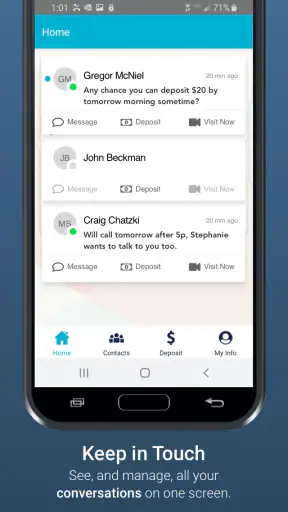
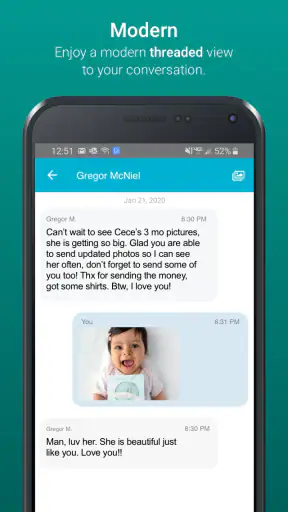
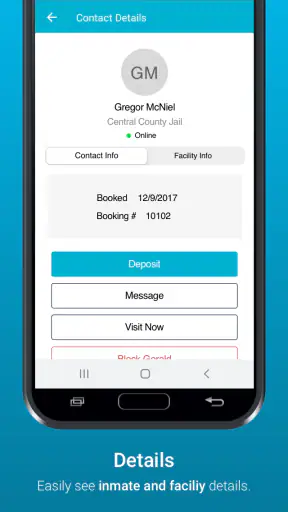
Staying in touch with someone in custody is not an ordinary messaging problem. The people involved may be working around facility rules, approved contacts, limited communication windows, and a service that needs to be dependable when a normal chat app is not an option. That is where GTL | GettingOut fits. I see it as a specialized communication and productivity app from Viapath, built for inmates, friends, and family rather than for casual social conversation.
I approached it with a practical question: can it make an emotionally important routine easier without pretending to be a full replacement for everyday messaging? My answer is cautiously positive. The app gives the right audience a focused way to manage communication, but it is not designed to compete with WhatsApp, Messenger, Signal, or ordinary SMS. Its value comes from serving a particular situation, and that also explains many of its limitations.
My main takeaway is simple: GettingOut is useful when your communication depends on the GettingOut system, but it is the wrong download if you are only looking for a general-purpose chat app.
How the current app feels in everyday use
The first thing I noticed is that this is a functional tool rather than a social platform. Its purpose is to help an approved communication process work more smoothly between people inside a correctional setting and the people supporting them outside. That narrow purpose is a strength because the app does not need to distract you with feeds, public profiles, or entertainment features.
For a family member, the useful mindset is to treat it as part of a communication routine. You are not installing it to browse endlessly. You are using it to check the available communication path, prepare what you need to send, and keep track of contact in a more organized way than relying on scattered phone calls, email threads, or handwritten notes.
The app is free to install, which lowers the barrier for relatives who simply need access to the service. That does not mean every communication activity connected with a correctional communication platform is automatically free, so I would still read the relevant in-app information carefully before assuming that the entire process has no cost. The free download is helpful, but it should not be confused with a promise that every possible service is included at no charge.
GettingOut is listed for everyone, and that makes sense for a tool that may be used by a broad range of families and contacts. In practice, though, the subject matter is serious and the audience is specific. A younger user may be able to install it, but the person managing the account or communication should understand the facility relationship and any rules attached to it.
A realistic family scenario
Imagine a relative who normally depends on occasional calls but wants a more consistent way to exchange messages with a loved one in custody. Instead of switching between the phone dialer, email, and notes on the refrigerator, that person can use GettingOut as the central place for the supported communication workflow. Before sending anything, I would make sure the intended contact is correctly selected, review the message for clarity, and check the status afterward rather than assuming that pressing send means the recipient has already read it.
That last habit matters. Communication involving an institution can have steps between sending and delivery. A message may be subject to availability, approval, scheduling, or other handling outside the app itself. GettingOut can make the process more manageable, but it cannot remove the conditions imposed by the facility or the service.
This is one of the less obvious points about using a specialized app: the best results come from treating it as a record of deliberate communication, not as an instant conversation. Short, clear messages are usually more practical than sending a long stream of emotional updates that may be difficult to review or may not fit the communication rules.
What makes it different from ordinary messaging
With a normal chat app, I expect both people to have the same app, an internet connection, compatible accounts, and broad freedom to message whenever they want. GettingOut operates in a more restricted environment. The other person may not have the same kind of device access, and the service is shaped by correctional communication procedures rather than by the expectations of consumer chat.
That difference changes how I judge it. I would not criticize it for lacking the polished social features of a mainstream messenger because those features are not the point. I would judge it on whether it helps an outside contact stay organized, use the intended channel, and understand what is happening to a communication request.
Compared with email, the app has a clearer connection to the specific communication service. Email is more familiar and flexible, but it may not be an accepted route for contacting someone in custody. Compared with phone calls, GettingOut can be more convenient for carefully written updates, especially when the sender wants to explain several details without trying to remember everything during a short conversation. Compared with SMS, it is more specialized but also less universal.
What the version history tells existing users
The current version is 3.4.3, and the app has been available since July 30, 2013. That long presence suggests a product that has had time to remain part of a real communication routine rather than appearing as a temporary experiment. I would still separate longevity from polish: an app can remain useful for years while retaining awkward screens or older design decisions.
For someone who has used an earlier release, the most important question is not whether the version number looks new. It is whether the current build still supports the basic workflow reliably on the device being used. I would update before an important communication task, then open the app and check the account, contact, and notification behavior in advance rather than waiting until a time-sensitive moment.
The minimum operating system is Android 7.0. That is fairly accommodating for people using older Android phones, and it may help families who cannot replace a device every few years. At the same time, older operating-system support can create a trade-off: compatibility is broader, but users on very old hardware may experience slower loading or less comfortable navigation than they would on a recent phone.
I would also avoid treating an update as proof that every account issue has been solved. App improvements can fix crashes, refresh the interface, or make a workflow clearer, while problems caused by account status, facility availability, contact approval, or network conditions can remain outside the app’s control. That distinction is important for existing users who have experienced a failed or delayed communication.
How the app’s scale affects expectations
GettingOut has passed one million installs, with an average rating of 3.3 from around twenty-two thousand ratings and roughly eleven thousand written reviews. Those figures tell me two useful things. First, this is not an obscure utility with no established audience. Second, the middling rating is a warning not to expect a universally smooth experience.
In a specialized service, ratings can reflect more than interface quality. Users may be reacting to delays, account problems, communication restrictions, or expectations that the app cannot control by itself. That does not make the criticism irrelevant. From a user’s perspective, a communication failure is still a serious problem even when the underlying cause is outside the application.
My advice is to read the rating as a reason to prepare a backup plan, not as an automatic rejection. If a message is urgent, do not rely on a single channel without checking whether another approved method is available. If the app works well for your specific facility and contact arrangement, its focused purpose may matter more than the average score.
Practical habits that reduce frustration
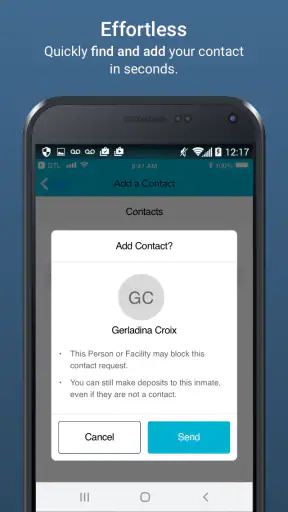
I would begin by keeping the account details and contact information consistent. Entering a wrong name, choosing the wrong person, or assuming that a newly added contact is immediately usable can create confusion. Before composing a sensitive message, I would verify the recipient and review the visible status of the communication route.
Second, I would write messages in a way that survives delay. Instead of saying “call me tonight” without context, I would include the day or situation that gives the message meaning if it is read later. This is a small but valuable adjustment for any service where delivery may not happen instantly.
Third, I would keep expectations realistic around notifications. A notification can tell you that the app has something to show, but it does not necessarily mean the other person has already received or read your message. Opening the app and checking the relevant conversation is more dependable than interpreting a phone alert as final confirmation.
Fourth, I would avoid uninstalling and reinstalling casually when something looks wrong. Before taking that step, I would check the network connection, confirm that the app is updated, restart the device, and make sure the problem is not limited to one screen or one communication attempt. Reinstalling can be disruptive if you are not certain that your sign-in details are available.
Where the experience still falls short
The biggest weakness is that the app cannot make a restricted communication system feel completely like ordinary messaging. Users may still encounter waiting, limitations, or steps that feel unclear. A family member who expects the immediacy of a consumer chat service could find the experience stressful, especially when the reason for a delay is not obvious from the screen.
Another limitation is the emotional weight placed on a basic utility. When a shopping app has a confusing button, it is annoying. When a communication app is used to reach someone in custody, a confusing button can feel much more serious. That means the interface needs to be especially clear, and users should not assume that a familiar-looking message screen behaves exactly like SMS.
I also think the specialized nature of GettingOut creates a learning curve for occasional users. A relative who only communicates once in a while may forget where to check status, how the contact relationship works, or which actions are available. A mainstream messenger benefits from near-universal familiarity; this app requires users to understand its particular role.
For that reason, I would not recommend it to someone who has no connection to the GettingOut service. If you simply want private messaging with friends, Signal is a better fit for privacy-focused conversations, while SMS is more universal and requires less setup. If you need group chats, media sharing, and a large social circle, a mainstream messenger will feel more natural. GettingOut is the better choice only when its specialized communication path is the one you actually need.
Who should use it, and who should skip it
I would recommend the app to relatives, friends, and approved contacts who need to communicate through the GettingOut environment and want one focused place to manage that contact. It can be particularly helpful for someone who dislikes making repeated calls, needs to send information in writing, or wants a more structured routine for staying connected.
I would also consider it suitable for people using an older Android phone, since the Android 7.0 minimum makes the app accessible on devices that cannot run some newer applications. Still, accessibility on paper does not guarantee a comfortable experience on every older handset, so I would test it before depending on it for an important exchange.
I would skip it if the intended recipient is not connected to the supported service, if you need unrestricted instant messaging, or if your main goal is a broad family group chat. Installing it without first understanding the communication arrangement can lead to disappointment. The app is not a universal bridge around institutional rules; it is a tool that works within them.
What I would watch as the product evolves
For future updates, I would pay attention to clarity more than visual redesign. The most valuable improvements would be easier explanations of message status, clearer guidance when an action cannot be completed, and a smoother way to distinguish account issues from facility-related restrictions. Those changes would help users make better decisions instead of repeatedly retrying the same action.
I would also watch how well the app balances older-device compatibility with modern reliability. Supporting a wide range of Android phones is useful for families with limited budgets, but older devices can make loading and navigation less comfortable. A good update should preserve access without leaving those users with a noticeably weaker experience.
Existing users should judge updates by their own routine. If the current release opens reliably, keeps the account accessible, and makes the required communication steps understandable, there may be no reason to change habits immediately. If an update changes navigation, I would spend a few minutes exploring the account and conversation screens before the next important message.
After using it as a specialized productivity tool rather than a normal chat app, I came away with a balanced view. GTL | GettingOut has a clear purpose, a free entry point, and enough history and adoption to be a serious option for people who need this particular service. Its rating shows that the experience is not flawless, and the app cannot control every condition affecting communication.
My recommendation is therefore practical: use it when GettingOut is the approved or expected route for staying in contact, keep messages clear, check statuses carefully, and maintain another appropriate way to handle urgent matters when possible. If you need ordinary instant messaging, choose a general messenger instead. For the families and friends it is actually built to serve, though, this focused approach can be more useful than a familiar app that cannot reach the person who matters.


